As we come to the end of the academic year, our annual night of celebration has once again arrived, honouring the incredible work of the clubs and societies led by our committed students. Last week, we recognised the time, effort and passion they have poured into building spaces where others can explore their interests, grow in confidence and, perhaps most importantly, find a sense of community. However, this year’s awards saw a notable change in format, one that was met with a degree of dissatisfaction and apprehension from many within the student body.
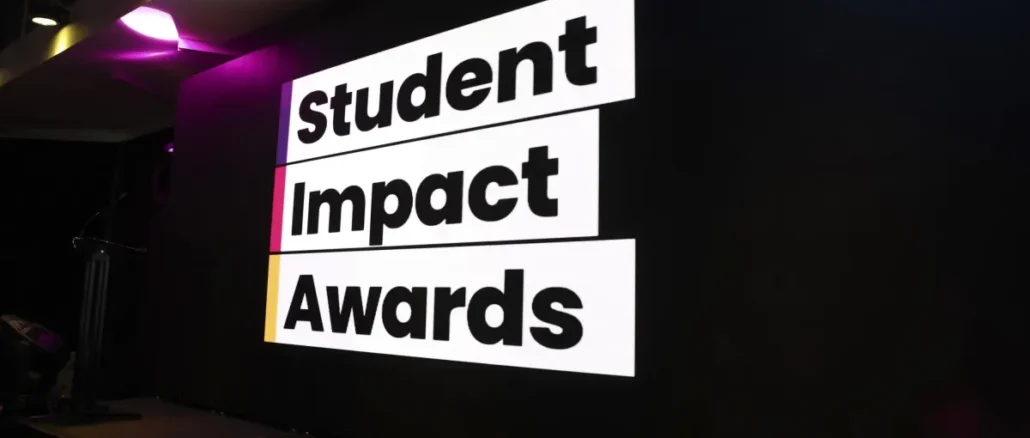
This year, however, the familiar Clubs and Societies Awards have been rebranded as the Student Impact Awards, marking a significant shift in how achievement is recognised at DCU. The new format shifts emphasis on activity levels and engagement, instead placing emphasis on the broader contribution students make to campus life. It highlights initiatives and leadership that demonstrate tangible impact, particularly in areas such as sustainability, mental health and community fundraising.
The change has been described by Director of the Office of Student Life, Una Redmond, as a new iteration of the awards, reflecting an effort to better capture the scope and significance of student engagement. Alongside this, the ceremony now incorporates several previously separate events, including those recognising class representatives, peer mentors and arts bursary recipients, bringing them under one umbrella.
This consolidation is intended to increase visibility and create a more cohesive celebration of student life. By moving the event on campus to the U Building, a central hub for student activity, organisers aim to make the awards more accessible and reflective of the wider community.
However, despite these intentions, the changes were initially met with concern among some students.
After speaking with committee members, several key themes emerged across the interviews. While there was little disagreement with the reasoning behind the change, its execution became a point of contention. Although “controversy” may feel strong, there was a clear sense of frustration, largely driven by a lack of communication between the Office of Student Life and student committees.
Many felt they were not given a clear understanding of what the Student Impact Awards would actually look like in practice. Questions around attendance, whether entire committees or wider club members would be included, as well as uncertainties about the change in location and the new style of awards, were left unanswered. As a result, committee members were often left to fill in the gaps themselves. It highlighted a wider need for clearer, more transparent communication from the Office of Student Life,
particularly when changes directly affect the student groups at the centre of these events.
Concerns were also raised about the decision to host the awards in the U Building. For some, moving the ceremony on campus risked taking away from the sense of prestige and formality that had been associated with previous years. However, this apprehension was not solely about the location itself, but rather the lack of clarity around how the space would be transformed for the event. Without a clear picture of what to expect, it was difficult for students to fully get behind the change.
More broadly, the hesitation surrounding the new format reflected a deeper concern about what the awards represent. For many students, the night has always been about more than recognition. It is an opportunity to come together with different clubs and societies, including those they may not usually interact with, and to celebrate each other’s work in a shared space. There was a sense that, without clear communication, this core aspect of community risked being lost, which ultimately explains why the reaction to the changes was as strong as it was.
Although initial reactions were mixed, perceptions of the night shifted once the event had taken place. Many of those interviewed admitted that it was far more enjoyable than they had anticipated. Overall, the evening was widely described as a success, with particular praise for the drinks reception and the overall set up. Sarah’s speech was noted as a highlight, while contributions from Shane Murphy and DCU President Daire Keogh were also described as especially commendable.
That said, students were clear that if the Student Impact Awards are to continue in this format, improvements can be made. A recurring point was the need for clearer communication and better preparation in the lead up to the event, particularly around ticketing and ensuring students are well informed. Some also felt that incorporating an off-campus element, even if only for an afterparty, could help retain the sense of occasion associated with previous years. Others suggested that certain awards might benefit from remaining separate, given how distinct they are, and that this separation could preserve a greater sense of significance for each.
Overall, the Student Impact Awards were well received and, for many, achieved what they set out to do in celebrating the breadth of student contribution at DCU. With some refinement, there is a shared sense of optimism about how the event can continue to grow, and students will be watching with interest to see how it develops in the coming year.