
The Artemis programme, a major new development in lunar exploration, is NASA’s ambitious initiative to return people to the Moon. The programme’s first crewed mission is poised to make history as the first human voyage beyond low Earth orbit since the Apollo 17 mission in 1972.
Initially scheduled for launch in late 2025 but delayed to “no earlier than March 6, 2026”, and now again to sometime in April, this mission will carry four astronauts on a 10-day ‘flyby’ around the Moon. The objective is to test the systems and capabilities needed for future lunar landings and, eventually, missions to Mars, even if ambitious.
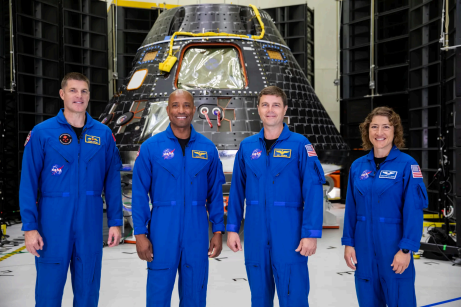
Artemis II is a collaborative effort led by NASA, with critical contributions from international partners like the European Space Agency (ESA), the Canadian Space Agency (CSA), and the Japan Aerospace Exploration Agency (JAXA). The crew, announced in 2023, includes US astronauts Reid Wiseman, Victor Glover, and Christina Koch, along with Canadian astronaut Jeremy Hansen.
So why now? With the rise of private space companies and competing nations such as China or the EU advancing their own lunar ambitions, the US is racing to establish a presence on the Moon. The mission will be the debut of NASA’s newest technology, such as the Space Launch System (SLS) rocket and the Orion spacecraft, while also preparing for the construction of the ‘Lunar Gateway’, a small space station orbiting the Moon. This gateway will serve as a staging point for further expeditions.
Artemis II is a stepping stone toward humans living and working on the Moon, and beyond. The mission will advance scientific research, from studying the lunar surface to understanding the effects of deep space travel on the human body. It also paves the way for the Artemis III mission, which aims to land the first woman in a crew of 4 on the Moon by 2028.
The success of Artemis II will set the stage for a series of more complex missions. The Artemis project will be crucial for the next big step in space exploration: sending humans to Mars. Artemis II is a huge scientific leap, and it reassures us that space exploration is alive and well in these precarious times, and that the Moon is just the beginning.