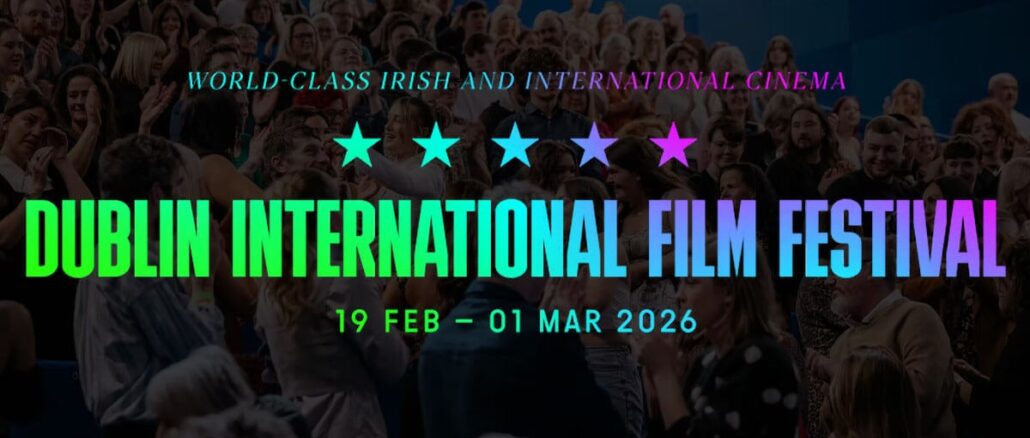
This year’s Dublin International Film Festival is set to be its biggest yet, celebrating the best of Irish cinema, with 26 Irish features and 17 world premieres. Bridging the gap between veteran Irish filmmakers and emerging talent, the festival promises to be accessible to all across its eleven-day run in the city centre.
Marking its 21st anniversary, the festival will offer a range of exciting events for film lovers, from exclusive screenings and pop-up events, to masterclasses and Q&As with acclaimed industry professionals—transforming the capital into a cultural hotspot.
While the festival showcases a wide variety of international offerings, it remains firmly focused on championing Irish filmmakers and audiences.
Here’s what not to miss across the jam-packed lineup:
Opening Gala Performance: Once Upon a Time in Cinema Premiere
The festival will open with director David Gleeson’s Once Upon A Time in A Cinema, starring Colin Morgan (Merlin). Set in 1980s Ireland, this dramatic comedy centres around a small-town cinema manager who faces both personal and professional challenges over the course of a turbulent 8pm screening. Director David Gleeson (Tolkien) will host a special introduction before the screening.
Documentaries in Focus
This year’s lineup features world premieres of Irish documentaries spanning from social issues to history, nature, and personal narratives. Three time golden globe winner, Colin Farrell, will attend the premiere of his new documentary The Slightest Touch (Directed by Rachel Fleit). It tells the story of his friendship with Emma Fogarty who lives with Epidermolysis Bullosa as the pair run the Dublin Marathon together.
Other noteworthy screenings include Displace: The Battle For Dublin, which examines the housing crisis over the past four years. An Irish Atlantic Rainforest looks to reverse ecological damage on the Beara Peninsula. According to DIFF team member Sarah Murphy, the documentaries “will highlight Ireland’s cultural and social landscapes, telling stories that resonate on both a local and global scale”.
Short Film Programme
The festival’s short film programme has expanded this year, featuring nine different strands. It is designed to support and promote emerging artists both in front of and behind the camera. The programme includes work from Screen Ireland, Virgin Media Discovers, First Credit Short Film Scheme as well as Community Shorts through the DIFF Film Pioneers. Audiences can expect a diverse mix of genres, from animation to social realism, showcasing the future of Irish filmmaking.
One to watch is Ballymun Filmmakers: New Voices On Screen, which comprises two original films created by a group of young filmmakers from Ballymun, offering a fly on the wall experience of life in the Dublin suburb.
Murphy says this year’s shorts programme “stands out for the levels of Irish filmmaking it represents and the pathways it creates for filmmakers at different stages of their careers”. It will reflect “the breadth, ambition and creativity of Irish filmmaking today.”
Special Screenings
Jim Jarmusch’s Golden Lion–winning Father, Mother, Sister, Brother will make its Dublin premiere at the festival. The drama, starring Cate Blanchett, was partly filmed in Stoneybatter. Colin McIvor’s Belfast-set thriller No Ordinary Heist, starring Éanna Hardwicke (Saipan), also features on the lineup ahead of its theatrical release.
Academy Award nominee Ciarán Hinds will make a double appearance in special screenings of Stephen Warbeck’s The Three Urns and Polly Findlay’s Midwinter Break, where he stars alongside Lesley Manville.
Industry Programmes, Panels and Masterclasses
Continuing its commitment to emerging talent, the festival will once again host the First Frame Initiative. Students from over 50 Irish universities and further education institutes are invited to screen their work in competition. Across two programmes, prizes will be awarded to the best films in each category, with workshops led by industry professionals running alongside screenings.
The Green from Script to Screen workshop, aimed at upcoming writers and hosted by director Daragh Goan, will explore climate-conscious storytelling from development through to distribution.
Panels will also run throughout the festival, including Changing the Lens: Diverse Voices on Screen. This brings together filmmakers from around the world to discuss navigating the industry as a minority filmmaker.
Accessibility
Murphy notes that “DIFF maintains its ethos of diversity and accessibility by working in two directions: opening pathways into filmmaking and removing barriers for audiences”.
The festival has introduced several schemes to make filmgoing more accessible during its run. For students, the Adam McKay 5% initiative sets aside a portion of tickets that are offered for free or at a subsidised rate. Supported by festival patron Adam McKay, the scheme ensures screenings and events remain accessible for the next generation. Interested participants can sign up by completing a short survey on the DIFF website.
The Avolon access scheme is aimed at community groups and charities who may not otherwise have the opportunity to attend cultural events. Free or reduced-price tickets are available to registered participants.
DIFF also offers concession pricing for under-24s, seniors, refugees, asylum seekers and those on jobseeker support, as well as industry passes that broaden access to events and professional development.
“By placing community participation, equitable opportunity and accessibility at the heart of the festival, DIFF helps ensure cinema is not just something people watch – it’s something they can be part of,” Murphy says.
The Dublin International Film Festival runs from the 19th of February to the 1st of March 2026. See diff.ie for more details.