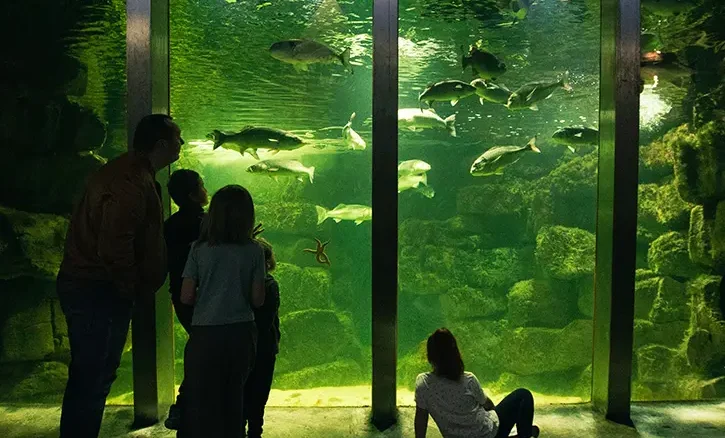
While in Ireland, aquariums are scarce, Galway Atlantaquaria has been operating since 1999, focusing on the education of native marine and freshwater species. Many aquariums have implemented conservation projects for specific animals, working alongside doctors and rescuing, rehabilitating and releasing these animals, provided they are well enough to do so.
This includes an array of animals from sea otters to turtles and sharks, where aquariums will often fund research for these animals as well as working closely with them, undergoing rehabilitation and sometimes in the hope of releasing them back into the wild.
Galway’s Aquarium has led specific conservation projects, including a number of turtle rehabilitations, the first taking place in 2014. In conversation with the Director of Education at Galway Atlantaquaria, Dr. Noirin Burke spoke to me about their conservation efforts, telling me they have been “running beach cleans and seashore safaris which focus on identifying and monitoring seashore species since 2008/2009”.
Galway Atlantaquaria has been the hub for the National Biodiversity Data Centre ‘Explore Your Shore’ Programme in Galway since 2023. During this year, they also established small conservation grants to provide support to local conservation initiatives in communities all over the country. In this Aquarium, there are approximately 70 species of marine invertebrates, marine and freshwater fish. The Aquarium exhibits are designed and regulated by a team of aquarists as well as the aquarium manager, monitoring the animals’ needs and welfare, including tank and life support systems, which are put in place to care for each animal specifically.
When asked about how the aquarium looks after their animals, Dr. Noirin Burke said, “Animal welfare is monitored using a series of specific welfare measures which are carried out by the team. Enrichment programs are used for many of the species to make sure their daily routines reflect the natural environments and their behaviors within it”.
The staff at the Galway Atlantaquaria are all qualified, with qualifications in marine biology / marine freshwater science. They operate working alongside other scientists within this field, including colleagues in Atlantic Technological University, the University of Galway, the Marine Institute, BIAZA (British and Irish Association of Zoos and Aquariums), EAZA (European Association of Zoos and Aquariums) , UNESCO, The National Biodiversity Data Centre, The Irish Ocean Literacy Network, Clean coasts, Galway City Council, Galway County Council and much more. Dr. Noirin Burke says, “these collaborations are vital to our work, as they help support and inform the work we do and ensure we are working to best practice and learn from our peers”.
I asked the Director of Education about her personal opinion on aquariums and why they are important. She stated that zoos and aquariums have an essential role to play in protecting the environment, “as a bridge or link between people and conservation, science, and sustainable practices. We can help break down barriers and help to facilitate conservationists and discussions with individuals of all ages. If we look at all the major threats to our environment, nature and our planetary systems, humans are at the centre of all of them.”
She says we need people such as specialists to help bring people together. “This includes bringing zoos and aquariums together, too, and other NGO and environmental groups. Galway Atlantaquaria is a proud member of the European Association of Zoos and Aquariums, which is made up of more than 400 zoos, aquariums and other organisations working together to make a difference for wildlife and our communities”.
With the surge of aquariums adapting to include ‘rescue, rehabilitate and release’ projects, I asked Dr. Noirin Burke for her opinion on the rise of these conservation projects.
“I think if they help protect and conserve wildlife in a way that incorporates animal welfare and care, then they are a brilliant idea. Nature and wildlife are under so much stress and pressure in the modern world. We hope that by helping to protect and care for species, while providing education and engaging the public, we can help increase sustainability practices in people’s everyday lives”.
Galway Atlantaquaria is open from 10 am to 5 pm each day, or 10 am to 6 pm during weekends and summer months. Staff are available on site during and before they open, and whenever needed after hours. The aquarium works with a team of experienced marine biologists and trained staff to examine and monitor the animals’ exhibits, behaviour, welfare, water quality and diets. “When an animal is identified as unwell, due to a change in its behaviour or feeding patterns, our staff will monitor and observe to decide if the animal needs to be moved to our quarantine area. Our staff can consult with staff from other BIAZA and EAZA collections and the veterinary team for advice and assistance if needed”.
In terms of deciding on tank size and where to place certain animals, Dr. Noirin Burke spoke of the collection plan, a strategic document that guides the decisions on which species to house, how many, and how exactly to care for them. “Tank size will be determined by the size of the animal, if it is still growing or fully grown, if its own species, or with other individuals or different species. Tank design will also be informed by the animal’s behaviour, if it is very active or if it prefers to camouflage itself, or if it is a pelagic or benthic species, which refers to whether they like to swim in open water or live on the sea or river bed”.
The team of aquarists welcomed over 100,000 visitors through their doors in 2024, from organising events with schools and art displays, contributing to conservation grants, and continuing their support towards communities across Ireland.