
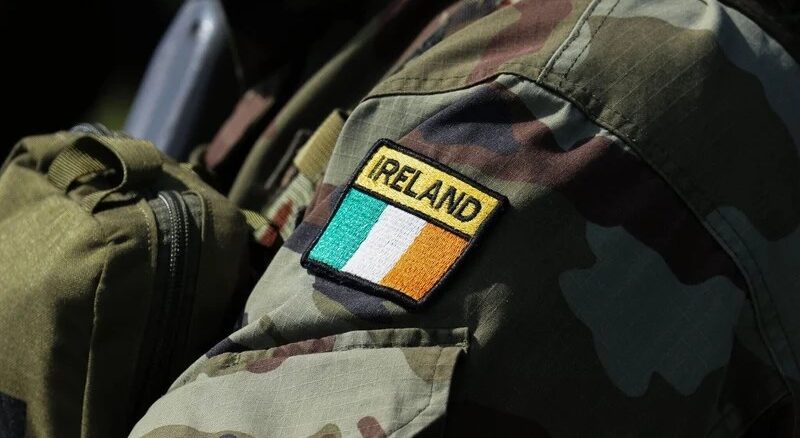
Legislation to scrap the Triple Lock has passed its first vote in the Dáil after 79 TDs backed the legislation and 71 opposed it. The Bill, which seeks to end the requirement for UN approval on the deployment of Irish Peacekeepers abroad, will be further scrutinised at the Committee Stage most likely next month. It is expected the contentious legislation will be enacted before the end of the year.
The ‘Triple Lock’ describes how Ireland decides to send Defence Forces Personnel overseas to serve as part of peacekeeping or peace enforcement operations. As it stands, it involves UN approval, a decision by the Government and a vote in the Dáil. The term ‘Triple Lock’ describes the legal process used to allow Irish overseas missions since the passage of the Defence Act (1960). The Triple Lock only allows the deployment of more than 12 members of the Defence Forces overseas when it has been agreed by the Government, the Dáil and the UN.
As to why the Triple Lock is under scrutiny, the Government has insisted the change was necessary to allow Ireland to continue sending peacekeepers overseas. Further, Taoiseach Micheál Martin said the change is about keeping the tradition of Irish peacekeeping alive. This is due to the Government’s concerns regarding the effectiveness of the current Triple Lock system in maintaining the peace mission’s efforts. The Government, under the proposed legislation, wants to remove the requirement for UN approval and to increase the number of troops that can be deployed, without a Dáil vote, from 12 to 50. The argument the Government has put forward is based on their concern that as the UN Security Council (UNSC) has become more dysfunctional, Ireland should not be held back by the permanent members of the UNSC.
Opposition was united in objections to the Bill, due to their belief that it’s an erosion of the country’s military neutrality. Mary Lou McDonald, leader of Sinn Féin, said that the dishonesty from the Government was staggering and repeated her call to put the question to the people in a referendum. Refuting this desire for a referendum, Minister Simon Harris said, “I don’t believe we run back to the Irish people with a referendum on every piece of legislation … this is not an attempt to change Ireland’s position on military neutrality.”
In conjunction, Taoiseach Micheál Martin further stated that the UN Security Council is no longer functioning, and he insisted that the ending of the Triple Lock does not involve any change to the Constitution and therefore does not require a referendum.
Public opinion has been heated, with many opposing the scrapping of the Triple Lock system.
Commenting on the result, one student said that “It is quite certainly not for the good of the people.” The DCU Students’ Union, in a statement, said that they “Condemned the Government’s plans to dismantle the Triple Lock.”
The Union is concerned that “removing a key safeguard for overseas military deployments raises serious concerns for Irish neutrality.” Aisling Boylan, VP of Community and Citizenship, says, “DCU Students’ Union calls on the Government to retain the Triple Lock… We encourage students to contact their local TDs on this important issue.” The Union further believes that “changes of this significance demand public scrutiny and democratic accountability.”


