
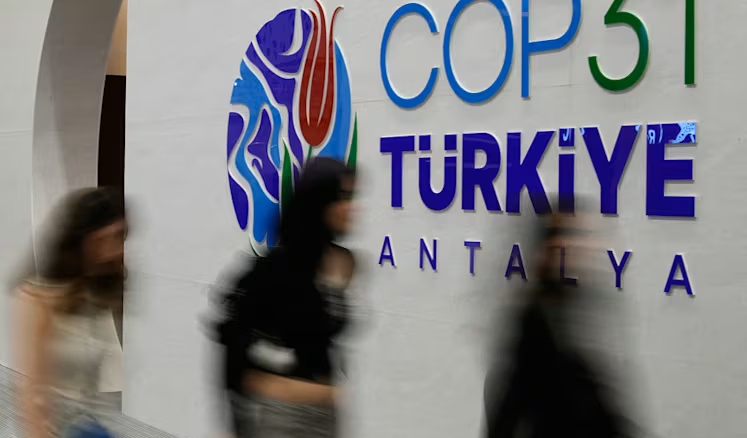
COP 31 negotiations end after failing to reach an agreement. A draft deal was proposed that did not specifically mention fossil fuels, leading to many countries walking away from the proposed agreement.
In Antalya , Turkey; the 31st annual United Nations Climate Change Conference has come to an end. The conference failed to unite 200 nations in a formal agreement to fight climate change. The EU, Pacific Island and other countries walked away from the agreement as the draft failed to mention fossil fuels directly, the main cause of climate change.
COP 31 took place between the 9th and 20th of November with the aim of drafting a new agreement to tackle global climate change. The negotiations ceased after 50 hours with no formal agreement.
The failed talks have caused outrage amongst political leaders. A joint statement from the Minister of Climate and Environment Darragh O’Brien along with Commissioner Hoekstra has stated, “We express our profound disappointment with the final draft COP31 cover decision.”
“We will not endorse a cover decision that does not even mention fossil fuels, the driver of climate change. And we will not accept negotiating backward in time.”
Many countries couldn’t agree on how to combat the rising global temperatures. The global temperatures are expected to breach the Paris Agreement Goal of 1.5 degrees.
Many poorer countries also spoke about the lack of financial commitment given to them by richer countries, and how, without any financial backing, these nations are failing to cope with climate change.
UN Secretary General Antonio Guterres has commented on the “powerful fossil fuel interests” present at the conference. He claimed that these countries were “distorting the science, delaying policy, blocking action, and piling up huge profits while people everywhere pay the price.”
On Monday, the 16th of November the first draft of the COP31 cover decision included the words ‘fossil fuels’ and ‘fossil fuel’ six times, an inclusion which was critiqued by the representatives of the oil producing nations present at the conference.
Saudi Arabia’s delegate Mohammad Ayoub argued that fossil fuels only accounted for a small percentage of greenhouse gases. Russia argued that if countries turned away from the likes of coal, oil and gas it could cause “fuel poverty”.
Simon Stiel, the UN’s Climate Change Executive Secretary has also commented on the talks in his closing speech of the event. “Our process must follow the science and meet the challenge […] At this COP, key negotiating decisions have been made including on a just transition. Fairness and inclusion in the climate fight is absolutely essential”.
Stiel then goes on to talk about how previous meetings have resulted in productive outcomes. Helping to meet new temperature targets and climate finance goals. Stiel went on to say that “..COP32 is a vital stepping stone. The second GST must build on the first……not step back….Humanity cannot afford anything else.”
Next year’s COP 32, held in Addis Ababa in Ethiopia will be under extreme pressure to relieve the tensions of the previous year.