“You can’t get the Irish down. This is our country. Get them f*cking out!” a woman bellowed through a megaphone. Forgetting, perhaps, that the guards she was encouraging people to attack were likely Irish too. Her words ripped through the crowd like a breaking wave.
As someone who stood there that night, watching the chants grow louder and the tension grow thicker, I felt a deep sadness that this was happening to my community. I couldn’t help but think about how fractured things have become. This was Ireland in 2025: divided and anxious.
What started as a peaceful movement quickly turned into a deadly riot.
Following an alleged sexual assault of a child on the grounds of the country’s largest IPAS centre, anger that had been simmering for months finally boiled over. Locals had already staged “car protests” against the government’s decision to purchase Citywest Hotel to house asylum seekers. But this was the spark that lit a much bigger fire.
By Tuesday afternoon, it felt like history repeating itself, just two years after the Dublin riots, which were also triggered by an attack on a child.
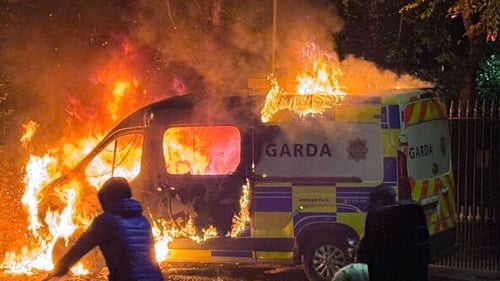
The crowd surged through the hotel avenue inside the complex grounds, fury spilling past the gates. A Garda van was set ablaze, and in a surreal moment, a sulky horse darted toward the guards, a picture of panic in the middle of madness.
It wasn’t long before riot squads pushed protesters down the hotel avenue and back onto the main road. The atmosphere was electric with hostility. Chants of “Get them out!” echoed through the crowd as numbers swelled to over two thousand. On the front lines were not just angry adults but children, some of whom looked to be making their first communion next May. Bottle bins were stolen from nearby businesses and hurled like missiles.
For over two hours, Gardaí faced a barrage of bottles, fireworks, traffic cones, and even chunks of masonry torn from a wall in a nearby estate. In Melbury Oaks, several homes lost power after rioters damaged an electrical box.
Pepper spray wafted through the air as the riot squad called for reinforcements. By 9:30 p.m., rumours spread through the crowd that the Garda water cannon was being deployed. Panic rippled, and people stampeded toward the Saggart Luas stop as the cannon rolled in behind advancing public order units. The sound of sirens and a helicopter overhead became the new normal for the residents as the unrest continued for a number of days. This was an incident of large-scale violence, one not largely seen in the Republic.
This time, the Gardaí were ready. Opposite to the unpreparedness that marked the 2023 riots, there was strategy and coordination. Almost 300 Gardaí were deployed that night, 125 in soft caps, 150 in full public order kit.
Yet even with that preparedness, the violence felt different. It wasn’t just anger at an incident; it was anger at an entire system. The Citywest riots weren’t only about an assault; they were about frustration, fear and the sense that the government’s handling of migration had alienated both residents and newcomers alike.
When the fires burned out and the roads were cleared, the debris left behind wasn’t just physical. It was emotional, a reminder that beneath the slogans and smoke, people are scared. Some fear for their children’s safety. Others fear for their right to belong.